Sunday, September 7, 2008

Earth box!

Life got hectic for a while -- honestly, it still is. But this is a nice way to forget about my upcoming tests and assignments due. (Hey, at least I cleaned the bathrooms in my apartment this weekend...)

About a month ago, I was on instructables.com (I love that website) where I found instructions on how to make my own Earth Box. I had never heard of such a thing, and after reading about it, and doing more research online, I thought it'd be a great idea to make one! Of course, I took pictures throughout the whole process.

First, I went to Wal-mart where I picked up a cheap pond basket, potting mix, and an inexpensive "rubbermaid" container (actual Sterilite) before heading over to Home Depot to get a length of PVC piping.

My new Dremel tool really came in handy with this project. The first thing that I did was cut out the center part of the lid. In this cut section, I cut out a square a bit smaller than the size of the pond basket in the center, and a circle about the diameter of the PVC pipe that I had in the corner.

I had to trim the edges of this cut section so that when the basket was attached, it would sit inside of the tub perfectly -- it was a lot of trial and error work, and unfortunately, I didn't take any measurements throughout this whole project.

I then took 4 equal lengths of PVC pipe to use as supports for the cut section. Trying to get these to the right size was also time consuming due to my trial and error methodology. To use these, I used hot glue to glue them to the bottom of the tub in places which would give the cut section the most support from the weight of the soil to be on top. Because of the pipe which was going to be coming through that hole I cut out in the cut section, I had to shift one of the supports further down. Keep in mind that the shifted support is in a specific location -- I failed to realize this and had to rip out my support and glue it back down in a new position.

In the picture above, you can see the supports glued down in their respective areas. Notice the location of the shifted support -- this is the WRONG location. I really should have noticed that sooner.

The next step was to glue the pond basket to the cut section in another effort to support the weight of the soil (at least to keep the pond basket stabilized in the correct place). This was fairly easy and hot glue did the trick again.

I guess now would be as good a time as any to explain the concept behind the earth box. This is how I take it... With container gardening, one of the toughest things to keep on top of is watering. With such small space for the roots to grow and for soil to maintain moisture, water is used very quickly. This is especially true for clay/terracotta pots, which allow moisture to escape. The earthbox is a container with a built-in reservoir in the bottom. A portion of the soil is in direct contact with the water in this reservoir which allows the water to wick up into the soil to the plants' roots above. In this set up, the cut section separates the soil from the reservoir while the pond basket allows for the direct contact for part of the soil. The reservoir is filled and topped-up using a length of PVC piping which extends down through the soil, through the small hole in the cut section, and into the reservoir. This system ensures that plants will always have enough water since when the soil dries out either from evaporation or take-up by the plants, more water wicks up to replace it. To prevent flooding of the box, drainage holes are put at the top of the reservoir section, to make sure the water level doesn't extend beyond this point.


The next step was to insert the cut section with the attached basket into the tub to rest on the supports. No gluing is necessary here as it should fit well with the supports keeping the future load from bending the plastic.


The pipe to fill the reservoir needs to extend deep into the reservoir itself, in order to help determine when the reservoir needs to be refilled or topped-up. The pipe was cut at a slant so that water would always be free to flow from it (I hope that's relatively simple to comprehend why).


Here you can see my horrible job at cutting that angle in the pipe. But hey, it works.


After putting it all together (inserting the pipe), I filled the pond basket with moistened potting soil to which I had added a bit less than a 1:1 ratio of perlite. Hopefully, this would help the water wick up to the drier soil quicker to begin with. Whether it worked or not, I don't know...but it did make sure the soil was fairly compacted in the basket. Before filling the reservoir or putting more soil in, I went ahead and inserted the drainage holes I mentioned ealier. I put three each on the long sides and one on each shorter end at roughly the same height...just to make sure that it'll drain quickly if there is an overflow.

I filled the tub the rest of the way up with soil, and put a couple of gallons of water into the reservoir (filled it until it started running out of the drainage holes).

I helped the water to equilibrate in the soil by watering from above a bit, to allow cohesion to help get the rest of the water to come up from the reservoir.

My first subject to be put into the earth box, I chose, was going to be the tomato seedling that I had started a couple of weeks back. I dug a hole for it, placed it in the corner of the earth box, and then laid a sheet of white plastic [read: trash bag] over top with a slit cut for the seedling.

The concept behind the plastic sheet is it prevents water problems in two ways. One, it prevents water from evaporating from the surface of the soil. This keeps as much moisture as possible in the soil and lessens the possibility of any part of the soil drying out. And two, it prevents rain water from infiltrating into the soil which could drown the plants if the drainage holes aren't performing well.

This picture above was taken right after it rained and if you can see, there are small puddles of water where there are indentations in the soil. This caused pools of water to form. This was one of the reasons I decided to later remove the plastic.

I removed the plastic a couple weeks later as it was just a hassle and not providing much benefit that I could tell. I decided that in order to retain the moisture, I would plant a dense ground-cover plant which would use water, yes, but prevent soil erosion and have a net moisture retention effect. I chose Corsican mint (also because it smells AMAZING). So I removed the plastic, divided my corsican mint into three sections, and also planted a Stevia plant I had bought at the farmers market along with the mint.

Here to the right is what the system looks like as of this morning. You can see the tomato plant has gotten much larger. The stevia got knocked over a little bit with the past storm so it's leaning a bit towards the corner more than it did originally, and you can see clearly one of the sections of corsican mint. I'm hoping the mint will cover the entire surface before too long (it's already on its way). As it is, I've only had to top-up the reservoir once. This system is performing rather well, I think.

Any questions, ask me in the comments!

Wednesday, August 6, 2008

I'm back.

I haven't updated this blog in a while. I've meant to plenty of times; I even took the camera around and took pictures for a few intended entries, but they never happened. I think a good pick up would be to revisit the plants that I've been growing! A plant by plant update is in order... (Pictures are a couple weeks old)

[Cilantro/Coriander]: dead. The transplant put the plant into shock, it bolted, and I got some seeds out of it. Moral of the story: don't transplant cilantro. I guess it's good to start out with the failures first; they make the successes seem that much more glorious.

[Basil]: is doing great! I let one of the plants bolt (along with the oregano) just to see how I can deal with it, but the other I've been keeping from flowering (as much as it tries). I'm going to make some pesto with it soon -- but not too soon, my mother just brought me a jar of her own homemade pesto. It'll last me a while.

[Tomatoes]: After some tomatoes started to grow, the plant was ravaged by a hornworm. I finally managed to catch the guy in action and promptly removed him, but the plant was weak. I noticed this morning, however, that since I've been watering it profusely and feeding it, it's starting to recover! I've got two almost-ready roma's on the vine and two more still green. (The ones visible in the picture are the ones still green. Go figure.)

[Bell Pepper]: The pot that I used to plant this in must have contained some type of pathogen because my bell pepper got the worse case of leaf-curl that I've ever seen. All of the leaves curled up into little spikes and the plant just stopped producing new growth. Moral of this story: sanitize/sterilize all used pots before reuse. Fortunately, the farmers market has a lot of bell peppers that are relatively inexpensive.

I've also added a couple new plants to my collection! After going to the farmers market a few times and seeing the many herbs, I just had to buy some rosemary. And to add to the fun, I also purchased some silver-edged thyme. Both have been transplanted into some large pots and are doing well.

Starting the hydroponic system back up in the fall seems like a certainty. I've got a little tomato (from a seed saved from a tomato from the farmers market [can you tell I love that place?]) growing which I'm going to transplant as soon as I get the system up and running. I just need to figure out what else I'm going to grow in it! I'm definitely open to suggestions!

So many exciting things are happening right now, but I'll save some of those for later posts.

Monday, June 16, 2008

Container Garden

One thing that I've been telling myself since I was little was that when I got my own place, I would have a garden and be able to grow all the plants I wanted. I wish I was that young again and could think something is that easy. Wait...it IS that easy! The past couple of weeks I've steadily been collecting plants from the farmers market, from home depot, and from other people; slowly building my "garden".

Now, while it wasn't exactly the situation I had in mind when I was younger (having a large plot of land and a humongous vegetable, fruit, and herb garden), I'm making due with the small bit of concrete slab extending out past my back door. I put most of my plants on a 7-foot tall metal shelving unit which I previously used for my hydroponic system -- recently disassembled due to energy-concerns (who needs artificial light when you've got the sun on your patio?). They seemed to be doing okay with the horrible, cheap soil I had gotten from WalMart. 97 cents per bag of potting soil may seem like a good "deal", but no. Don't get it! I went ahead and bought another bag recently of Miracle-Gro potting soil which is much, much better.

So far I've been growing lettuce (slowly, the time of year isn't quite right), cilantro/coriander, genovese sweet basil, oregano, roma tomatoes, and bell peppers. My interests in gardening are definitely more culinary in nature, which I think is fairly obvious by my selections. My roommate for the summer, one of my good friends, is growing a few of her own things as well: chocolate mint, lemon-balm, apple mint (seeing a pattern here?), cayenne peppers, jalapeno peppers, and a lone, $1 french marigold.

Until recently, we've had enough pots that we had found lying around or made to keep us in good shape. But when some of our new plants needed to be transplanted into bigger pots...we were stuck. As luck would have it, I stumbled across a large stash of old, unused terracotta pots in both small and medium sizes! We loaded up with as many as we could take (about 30 of the medium, and 30 small as well) and headed back to get our hands dirty. After a good time of mixing new potting soil and transplanting our plants from their cheap soil to the new stuff in the newly-found terracotta pots -- and with a good watering -- they seemed quite happy.

I just hope I can get my hands on some more plants before it gets too late! ...I've definitely got plenty of pots!

Sunday, May 25, 2008

Gnocchi!

For a few months now, I've wanted to try my hand at making gnocchi after enjoying a particularly spectacular gnocchi dish from Maggiano's in Durham. I brought down my Italian Vegetarian cookbook and found a simple potato gnocchi recipe. The main reason I didn't try to make this dish earlier is because I did not own a potato ricer -- one of the most important devices for making gnocchi [apparently]! That is, until I broke down and bought one off of Amazon.com because I simply had to make these.

The recipe I used was pretty basic, a couple pounds of baked, riced potatoes with enough flour to make the dough not sticky plus a teaspoon of salt. I took a shortcut and baked the potatoes in the microwave, which seemed to work fine. After they were baked, I peeled them [with oven mits, those things were hot] and riced them into a bowl. In the first picture, you can see the potato ricer and the carnage of potato peelings left in my sink.

Once in the bowl, I let them cool and then added the flour and salt. Following the recipe, I mixed it all together by hand until it was incorporated but not overworked. Working with this dough was interesting because the dough has a unique texture: soft and silky but almost stiff as well.

Next the fun part! Rolled out the dough into long "ropes" on the counter and then cut them into 3/4" pieces. One of the most unique things about gnocchi in my opinion is the shape of the pieces. Ridges on one side, but a smooth indent on the other. The Italian Vegetarian cookbook (which is an amazing cookbook, by the way) told me to use a fork and use my index finger to put the indent into the back. So what I ended up doing was to use the back of the fork and place each piece, one by one, onto the fork and press their backs -- pushing them into the fork, to give the ridges, and leaving the indent from my finger. I guess that was the point!

Next step was to plop them into boiling water and wait until they started floating. I had to try one at this point, even sans-sauce, and it was the kind of melt-in-your mouth texture that I was hoping for! I used a slotted spoon to fish them out of the water and mixed them with some pre-made pesto sauce. Unfortunately I didn't have any fresh pesto -- but I'm working on it! More on that some other time.

Served them with some peas, and they were delicious. My roommates (and I of course) loved it!

An experiment well done, with delicious, tasty results.

Sunday, May 18, 2008

To start

The semester is over and I am now a junior in college. A brief thought entered my mind a little while ago: I've now spent a longer time outside of NCSSM than I did in. Science and Math was a place I thought I would remember vividly forever, but here it is only two years afterward, and the effect has faded substantially. There I grew as a person, I found myself and began listening to my own "voice". Most of my memories from that school were, however, simply of people -- people from whom I've drifted. My memories of those people are fading and now NCSSM seems more like a vague attachment than a true connection. Maybe in the future, if I somehow attribute anything I do to my attendance at that school, I will remember it differently.

Today I feel was an important day. Ever since I was young I've always seemed to have a problem with picking up hobbies and interests, little projects here and there, but never completing them. The closest hobby I had ever really come close to, in my mind at least, completing was playing violin. Now, though, I see that I'm not progressing even in that interest. But today, today is the day I completed one of my projects! This is the first time which I've completed something from conception, to design, to purchasing of materials, to the assembly.

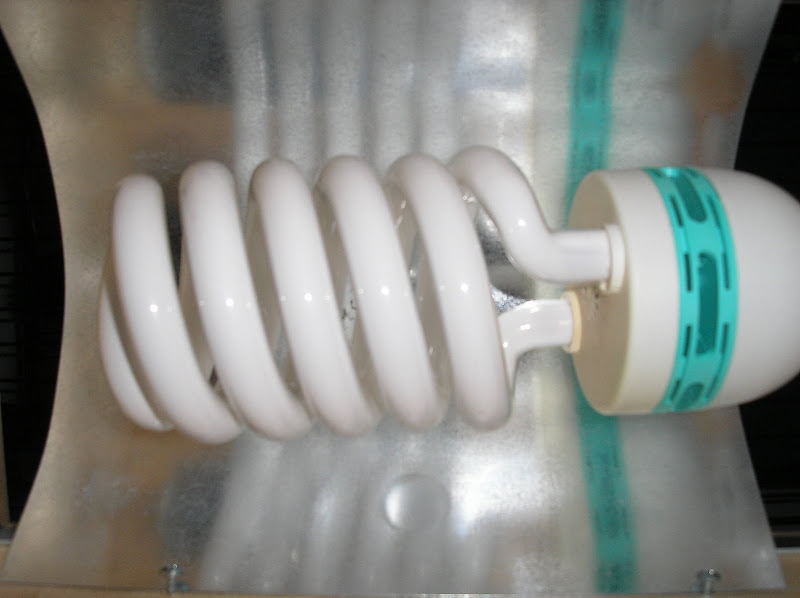
I decided a few months ago that I needed to create a hanging light structure to house my 105-watt CFL bulb illuminating my hydroponics system. My father helped me get only a few parts [electrical, mainly] since I had very little idea of how the structure would be built. After a couple of weeks of not working on it, I cast it aside as another one of "those projects" that never get finished. That was until a few days ago when my friend, Leah, suggested we do something and building that light structure popped into my head -- I went with it! I sat down and drew out some plans, figured out the materials I would need, and bought them. A bit of labor later and I've got a new hanging light structure to use with whatever plants I decide to grow next in my hydroponics system.